Master the timing that transforms tree care from expensive maintenance to strategic investment in this Kitchener Tree Service guide.
Discover the seasonal secrets Kitchener arborists use to time pruning and fertilization perfectly, plus insider knowledge about Ontario’s climate patterns that can save your trees and your budget while supporting the city’s urban canopy expansion goals.
Your neighbour’s maple was pruned in July and now shows signs of stress and disease entry. Meanwhile, your properly timed late-winter pruning created the strong, balanced canopy that sailed through last spring’s windstorms without damage. The difference? Understanding how tree growth cycles interact with Kitchener’s climate to create optimal windows for care.
With the City of Kitchener committing to plant nearly 20,000 new trees over 2025-2026 as part of its “Growing Kitchener’s Urban Canopy” initiative, homeowners across our region are learning that timing isn’t just about convenience—it’s about tree survival, property protection, and maximizing your investment. Whether you’re caring for mature specimens that predate your home or establishing young trees that will define your property for decades, understanding Ontario’s unique seasonal patterns and how they affect tree biology can transform expensive maintenance into strategic care that builds healthier, more resilient urban forest.
Research by the University of British Columbia highlights how seasonal timing of pruning and fertilization significantly influences urban tree health and resilience.
Kitchener Tree Service Guide: The Foundation of Timing and Growth
Kitchener’s continental climate creates distinct seasonal phases that directly influence when trees can safely be pruned, how they respond to fertilization, and what care strategies work best for long-term health and storm resistance.
Winter Dormancy: The Optimal Intervention Window
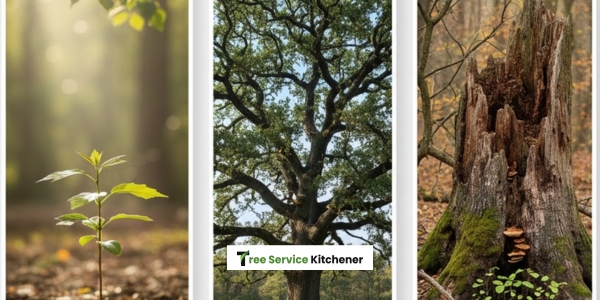
From December through February, Kitchener trees enter true dormancy when above-ground growth stops but root systems remain active until soil freezes. This dormant period provides the safest window for major structural pruning because trees aren’t investing energy in leaf production, disease organisms are largely inactive, and wounds can begin healing immediately when spring growth resumes. For fruit trees and ornamental flowering species, this timing is critical—pruning during dormancy maximizes next season’s bloom and fruit production while minimizing stress.
Spring Awakening: Strategic Fertilization Timing
March through early May represents Kitchener’s prime fertilization window, when soil temperatures rise and root activity increases dramatically before leaf-out. Trees mobilize stored carbohydrates to fuel new growth, making this the ideal time to provide supplemental nutrients that support vigorous shoot development and disease resistance. Young trees are particularly responsive to spring fertilization, especially nitrogen-based products that fuel establishment and canopy development during their critical first decade.
Summer Maturation: Maintenance and Observation
Kitchener’s hot summers signal trees to shift from rapid growth to hardening new wood and building energy reserves. This period requires careful maintenance—emergency pruning for safety remains necessary, but major structural work should be avoided as it forces trees to redirect energy when they’re already dealing with heat stress and potential drought conditions. However, summer provides excellent opportunities to assess tree health, identify developing problems, and plan fall and winter interventions.
Understanding these cycles helps Kitchener homeowners work with their trees’ natural biology rather than against it, creating more resilient specimens that better withstand our region’s weather extremes and require less long-term maintenance intervention.
Species-Specific Timing for Common Kitchener Trees
Different tree species popular in Kitchener landscapes have evolved with varying growth patterns that require adjusted pruning and fertilization schedules for optimal results.
Maple Species: The Backbone of Kitchener Canopy
Sugar maples, red maples, and silver maples dominate Kitchener’s urban forest and require careful timing due to heavy sap flow in early spring. Prune these species during deep dormancy (December through January) to avoid the “bleeding” that occurs when sap rises in February and March. While sap flow doesn’t harm trees, it can be messy and may indicate suboptimal timing. Spring fertilization works excellently for maples, particularly young specimens establishing in urban soil conditions. Mature maples often need minimal fertilization unless soil tests indicate specific deficiencies.
Oak Species: Long-Term Investment Trees
The oaks planted throughout Kitchener neighborhoods require patient, precise care that reflects their slow growth and century-plus lifespans. Structural pruning during dormancy builds the strong framework these trees need to withstand storm loads. Oak species respond well to fall fertilization (October-November) when they’re building root mass and energy reserves for next season’s growth. Young oaks benefit from professional structural pruning every 3-4 years, while mature specimens may need assessment only every 5-7 years unless problems develop.
Spruce and Pine: Evergreen Considerations
Kitchener’s spruce and pine trees follow different growth patterns than deciduous species, with two primary growth flushes—spring and sometimes a smaller summer flush. Prune evergreens in late winter before spring growth begins, focusing on structural issues and dead branch removal. Avoid fall pruning which can stimulate growth that won’t harden before winter. Fertilization timing for evergreens favors early spring application that supports needle development and root growth without encouraging late-season growth vulnerable to frost damage.
Ornamental Species: Flowering Trees and Aesthetics
Flowering cherries, crabapples, and ornamental pears popular in Kitchener landscapes require specialized timing to maintain both health and aesthetic value. Prune these species immediately after flowering to preserve next year’s bloom display, or during dormancy if structural needs outweigh flowering concerns. These ornamentals often need more regular fertilization than native species due to breeding for appearance rather than urban tolerance, making spring and fall applications beneficial for maintaining vigor and disease resistance.
Kitchener Tree Service Recognizing When Trees Need Intervention vs. Removal
Many Kitchener homeowners face unnecessary removal costs because they can’t distinguish between trees that need professional care and those that truly require removal. Understanding these differences protects both your investment and Kitchener’s urban canopy goals.
Treatable Nutrient and Health Issues
Yellowing leaves (chlorosis), reduced annual growth, and minor dieback often indicate treatable nutrient deficiencies or soil problems rather than terminal decline. These symptoms frequently respond to targeted fertilization, soil improvement, and corrective pruning. Professional soil testing can identify specific nutrient imbalances that, when corrected, restore tree vigor and extend useful life by decades. This approach aligns with the City’s emphasis on preserving mature trees where safely possible.
Structural Problems That Respond to Pruning
Co-dominant stems, crossing branches, and weak unions—common structural issues in Kitchener’s urban trees—often can be managed through selective pruning, cabling, or bracing rather than removal. Early intervention during a tree’s establishment phase builds strong structure that reduces future risk and maintenance needs. Even mature trees with structural concerns may benefit from risk-reduction pruning that extends safe useful life while preserving canopy benefits.
Disease Management vs. Removal Decisions
Fungal diseases like needle cast in spruce or anthracnose in maples may look alarming but often respond to improved cultural care, targeted treatments, and selective pruning to improve air circulation. However, certain diseases like Dutch elm disease or emerald ash borer infestations require immediate professional assessment to determine whether treatment is viable or removal necessary for community forest protection.
When Removal Is Actually Necessary
True removal candidates show extensive structural decay, root system failure, or disease conditions that pose unacceptable risk to property or safety. Professional arborists use standardized risk assessment protocols to distinguish between trees that can be managed and those that must be removed, helping homeowners make informed decisions based on actual risk rather than convenience or appearance preferences.
Coordinating with Kitchener’s Municipal Tree Care Program
Understanding how your private tree care integrates with the City of Kitchener’s forestry program helps maximize the effectiveness of both public and private canopy investments.
City Street Tree Maintenance Cycles
The City of Kitchener follows a systematic pruning rotation that targets different neighborhoods annually, focusing on structural pruning during dormancy periods and emergency response as needed. Private tree care should complement these efforts by addressing trees not covered by municipal programs—typically trees located more than 10 feet from the street or on private property beyond the road allowance. Coordinating your pruning schedule with city work helps ensure consistent care approaches and may provide cost efficiencies when professional crews are already working in your neighborhood.
Integrated Pest and Disease Management
The City monitors for major pest and disease threats like emerald ash borer, gypsy moth, and various fungal pathogens that affect multiple properties simultaneously. Private tree care should support these efforts through prompt reporting of suspicious symptoms, following recommended treatment protocols, and timing interventions to support community-wide management strategies. For example, coordinating ash tree treatments with city-wide emerald ash borer management creates more effective population suppression than scattered individual efforts.
Supporting Canopy Expansion Goals
Kitchener’s commitment to planting thousands of new trees creates opportunities for private property owners to participate in broader canopy enhancement. This includes selecting species that complement municipal plantings, maintaining trees that contribute to neighborhood canopy goals, and replacing removed trees rather than leaving sites vacant. Private tree care investments become more valuable when they support broader urban forest objectives that enhance property values and community environmental benefits.
Professional Collaboration with Municipal Standards
Tree Service Kitchener works closely with city forestry staff to ensure private tree care meets or exceeds municipal standards for pruning practices, safety protocols, and environmental stewardship. This collaboration ensures consistent quality across Kitchener’s urban forest while providing homeowners access to expertise that aligns with city objectives and maximizes long-term canopy benefits.
Modern Techniques and Technology in Tree Care Timing
Professional tree care has evolved beyond traditional calendar-based timing to include sophisticated assessment tools and techniques that optimize intervention timing for individual trees and site conditions.
Soil Testing and Nutrient Analysis
Modern soil analysis goes beyond basic pH testing to evaluate nutrient availability, organic matter content, and soil structure factors that affect tree response to fertilization. Professional arborists use these results to customize fertilization programs that address specific deficiencies rather than applying generic treatments. In Kitchener’s varied soil conditions—from clay soils in older neighborhoods to sandy soils in newer developments—this targeted approach often produces better results with lower environmental impact.
Growth Assessment and Monitoring
Professional tree care now includes systematic monitoring of annual growth increment, seasonal response patterns, and long-term health trends. This data helps identify optimal timing for interventions and track response to previous treatments. For valuable specimen trees or those in challenging urban sites, this monitoring approach catches problems early when treatment is most effective and least expensive.
Disease and Pest Timing Integration
Modern integrated pest management considers insect life cycles, disease development patterns, and environmental conditions when timing treatments. For example, treating for scale insects requires timing applications to target vulnerable crawler stages, while fungal disease prevention requires protective treatments before infection windows open. This precision timing approach often reduces treatment frequency while improving effectiveness.
Climate Data and Seasonal Optimization
Professional Kitchener tree services now use detailed climate data including growing degree days, soil temperature monitoring, and seasonal precipitation patterns to optimize timing of care activities. This scientific approach helps predict optimal windows for different activities and adjust timing when weather patterns differ from historical norms. For Kitchener’s sometimes unpredictable spring and fall transitions, this data-driven approach improves success rates for major interventions.
Tree Service Kitchener incorporates these modern approaches into comprehensive care programs that maximize tree health outcomes while optimizing client investments through precise timing and targeted treatments.
Building Long-Term Tree Care Programs
The most successful tree care investments follow systematic long-term programs rather than reactive responses to problems, creating healthier urban forests and predictable maintenance budgets for homeowners.
Establishment Phase Planning (Years 1-10)
Young trees require intensive management during their establishment decade, with annual assessment and intervention as needed. This includes structural pruning every 2-3 years to build strong framework, regular fertilization to support rapid growth in urban soils, and irrigation management during summer stress periods. While this phase requires higher investment per year, proper establishment care creates trees that need less intensive management throughout their mature lives.
Maturity Phase Management (Years 10-50)
Mature trees shift to maintenance-focused care with longer intervals between major interventions. Professional assessment every 3-5 years identifies developing issues before they become expensive problems, while selective pruning maintains structure and manages storm risk. Fertilization may shift to targeted applications based on soil testing rather than routine annual treatments. This phase often provides the best return on investment through sustained property value enhancement and environmental benefits.
Legacy Tree Preservation (50+ years)
Valuable mature specimens require specialized care focused on preservation and risk management. This includes detailed health monitoring, targeted treatments for age-related issues, and sometimes specialized support systems like cabling or bracing. While these trees eventually require removal, proper care can extend useful life significantly while maximizing their contribution to property value and community canopy goals.
Species-Appropriate Scheduling
Long-term programs account for species-specific needs, timing requirements, and expected maintenance cycles. Fast-growing species may need more frequent intervention, while slow-growing trees require patient, precise care. Understanding these patterns helps homeowners budget appropriately and ensures trees receive care at optimal times throughout their lives.
Professional tree care programs provide roadmaps that turn tree ownership from uncertain maintenance expenses into predictable investments that enhance property values while supporting Kitchener’s urban forest goals.
Arborist Kitchener Tree Service Expert
Understanding tree growth cycles transforms tree care from reactive maintenance to strategic investment that builds healthier, more valuable urban forest. Time your pruning and fertilization with Kitchener’s seasonal patterns and your trees’ natural biology to maximize results while minimizing costs and stress. Work with professional arborists who understand both the science of tree biology and the practical realities of managing trees in Kitchener’s unique climate conditions for long-term success.
Master tree growth cycles for optimal pruning and fertilization timing in Kitchener. Expert guide to seasonal tree care that saves money and builds health.
Ready to optimize your tree care in Kitchener? Contact Tree Service Kitchener today for a free consultation on species-specific pruning and fertilization timing that aligns with local growth cycles and saves you time and money.
FAQs
- How often should I have my trees professionally pruned in Kitchener?
For mature trees in Kitchener, professional pruning every 3-5 years is recommended to maintain structural integrity and reduce storm damage risk. Young trees need more frequent pruning, approximately every 2-3 years, to develop a strong framework.
- Can fertilization improve my trees’ resistance to common pests and diseases in Kitchener?
Yes, timed fertilization improves tree vigor and immune response, helping trees better resist pests and diseases prevalent in Kitchener, such as anthracnose and needle cast. Using professionally tailored fertilization plans ensures nutrients target specific deficiencies.
- Does Tree Service Kitchener offer consultation for customized tree care plans?
Yes, Tree Service Kitchener provides expert consultations to create species-specific pruning and fertilization schedules based on local climate and soil conditions, optimizing tree health and supporting the city’s urban canopy goals.
- What are the signs that a tree needs removal rather than treatment?
Signs include extensive decay, root failure, severe structural instability, or infestations such as emerald ash borer that threaten safety or surrounding trees. Licensed arborists conduct thorough risk assessments to determine if removal is necessary.
- How does proper pruning timing affect blooming in flowering trees?
Pruning flowering trees immediately after bloom preserves next year’s floral display, while structural pruning during dormancy prioritizes tree health without sacrificing blossoms. Proper timing balances aesthetics and tree resilience.
People also ask
- When is the best time to fertilize trees in Kitchener for maximum growth?
Spring, from March through early May, is ideal because roots become active before leaves emerge, allowing trees to absorb nutrients efficiently and support vigorous growth. - What impact does Kitchener’s climate have on tree pruning schedules?
The distinct seasonal changes, including cold winters and warm summers, create optimal windows for pruning during dormancy and less ideal times such as midsummer when trees are stressed by heat. - Can I prune my own trees, or should I hire professionals in Kitchener?
While minor pruning can be done by homeowners, professional arborists ensure correct timing, technique, and safety, especially for larger or valuable trees, optimizing health and minimizing damage risk. - How does coordinated care with the City of Kitchener improve private tree maintenance?
Aligning private pruning schedules with municipal programs supports uniform care standards, reduces maintenance redundancies, and enhances the success of community pest and disease management efforts. - Are there environmental benefits to following a long-term tree care program in Kitchener?
Yes, systematic care improves tree longevity, increases urban canopy cover, enhances carbon sequestration, and supports biodiversity, contributing positively to Kitchener’s environmental health goals.
Tags: Kitchener tree service, tree care Kitchener, tree pruning timing, tree fertilization Ontario, Kitchener arborist, seasonal tree maintenance