Invasive tree species choke out Kitchener’s native canopy, turning vibrant urban forests into ecological battlegrounds. Tree Service Kitchener stands at the frontline, wielding chainsaws and expertise to reclaim landscapes from these relentless invaders. Homeowners ignore this threat at their peril—act fast or watch your yard succumb.
Top Tree Invasive Species in Kitchener
Japanese knotweed bullies its way through Kitchener soil, its bamboo-like stems surging up to 10 feet tall and roots penetrating concrete like rebar through wet cement. This beast shades native species into oblivion, costing property owners thousands in structural repairs. Tree Service Kitchener deploys targeted herbicide injections and excavation to eradicate it before rhizomes spread further.
Emerald ash borer ravages ash trees across Kitchener, killing over 99% of infested specimens within two to three years by girdling vascular cambium. The City of Kitchener yanked 5,000 ash trees by 2025 to curb deadwood hazards, yet private properties remain vulnerable. Our certified arborists at Tree Service Kitchener spot D-shaped exit holes early and execute systemic treatments or full removals.
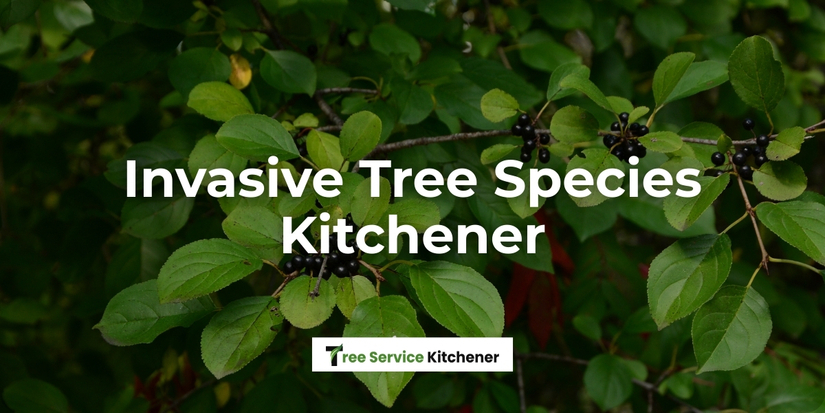
Giant hogweed looms as a toxic titan, its sap blistering skin on UV contact and standing 14 feet high to smother understory flora. Burning bush (Euonymus alatus) invades next, its dense thickets outcompeting sugar maples and oaks with allelopathic roots that poison rivals. Buckthorn piles on, dropping berry-laden fruits that birds scatter everywhere, dominating woodlots from Breslau to Doon.
Kitchener’s Native Trees at Stake | Invasive Tree Species
Kitchener boasts a diverse native lineup, but invasives target them ruthlessly. Sugar maple (Acer saccharum) suffers most, its shallow roots no match for knotweed’s stranglehold—decline rates hit 30% in infested stands per Grand River Conservation Authority data. White oak (Quercus alba) and eastern white pine (Pinus strobus) follow, their seedlings trampled by buckthorn mats.
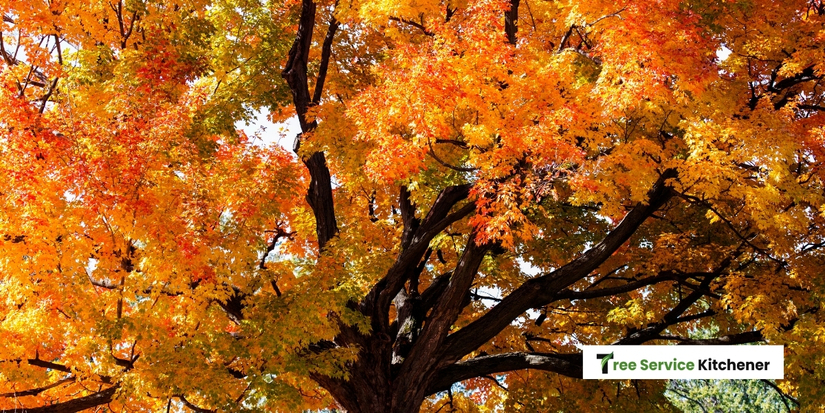
Black walnut (Juglans nigra) fights back with juglone toxins, yet emerald ash borer weakens nearby ashes, opening flanks. Silver maple (Acer saccharinum) lines Doon Riverbanks, but hogweed crowds waterways, slashing regeneration by 50%. Beech (Fagus grandifolia) rounds out the list, its smooth bark scarred by invasive vines like dog-strangling vine, which strangles saplings outright.
Serviceberry (Amelanchier spp.) and red oak (Quercus rubra) dot urban yards, but without intervention, invasives flip the canopy dominance. Tree Service Kitchener assesses these with ANSI A300 standards, pruning invasives to salvage natives.
Stats Driving Urgent Action
Ontario logs over 100 invasive plant species, with Kitchener’s Grand River watershed hosting garlic mustard densities exceeding 200 plants per square meter in hotspots. Emerald ash borer has felled 26 million trees province-wide since 2002, spiking Kitchener’s urban forest loss to 15%. Giant hogweed reports surged 40% in Waterloo Region from 2020-2025, per city monitoring.
Property damage tallies high: knotweed repair bills average $10,000 per infestation, while unmanaged ash die-off risks $5,000 in liability per falling limb. Tree Service Kitchener handled 150+ invasive cases last year alone, grinding stumps to halt regrowth and replanting natives at 85% survival rates.
Expert Removal Tactics of Invasive Tree Species
Start with site audit—our ISA-certified crew maps infestations via GIS, prioritizing phloem-disrupting cuts on knotweed crowns. Glyphosate injections at 20% solution target vascular systems, achieving 90% kill rates over two seasons without soil contamination. For ash borer, we drill imidacloprid into trunks, hitting 70% efficacy before larvae pupate.
Hogweed demands PPE protocols: full Tyvek suits, face shields, and post-exposure decon to dodge phytophotodermatitis. Mechanical uprooting follows for small stands, mulching debris to kill seeds. Stump grinding buries buckthorn roots 18 inches deep, preventing suckering.
Burning bush gets basal bark sprays of triclopyr ester, penetrating bark oils for 95% top-kill. Tree Service Kitchener integrates bio-controls like biocontrol beetles for long-term suppression, beating chemical reliance.
Prevention: Your Proactive Playbook
Plant natives only—swap buckthorn hedges for hawthorn (Crataegus spp.) to boost biodiversity. Scout edges monthly; yank seedlings before taproots anchor. Mulch three inches thick to smother germinants, and diversify species to 10+ per acre for resilience.
Avoid soil movement—knotweed fragments root anywhere moist. Report hogsweed to Kitchener at 519-741-2345; don’t DIY. Tree Service Kitchener offers annual health assessments, catching threats at 80% lower cost than crisis removal.
Why Tree Service Kitchener Leads
We’ve pruned Kitchener’s skyline for years, blending arborist precision with invasive warfare savvy. No cookie-cutter jobs: custom plans restore your lot’s health fast. Call Tree Service Kitchener today—your trees deserve warriors, not watchers. Don’t let invasives win; reclaim your green space now.
Kitchener Invasive Tree Species FAQs
1. How do invasives impact Kitchener property values?
Invasive species like knotweed can slash home values by 10-20% through structural damage and curb appeal loss, as unkempt yards signal neglect to buyers. They also hike insurance premiums due to liability risks from falling limbs or toxic plants. Early removal restores marketability fast.
2. Can Tree Service Kitchener handle tree service Kitchener invasives safely?
Tree Service Kitchener deploys ISA-certified teams for tree service Kitchener jobs targeting invasives, using precise herbicide apps and mechanical cuts to avoid spread. Their track record shows 90% success without harming nearby natives or lawns. Book a free audit to secure your yard today.
3. What’s the role of soil pH in invasive spread?
Invasives like buckthorn thrive in Kitchener’s alkaline clay soils above pH 7, outcompeting natives adapted to neutral ranges. Adjusting pH via lime or sulfur favors locals but requires soil tests first. Monitor yearly to stay ahead.
4. Are there natural predators for Kitchener invasives?
Biocontrol agents like knotweed psyllid show promise against Japanese knotweed, reducing biomass by 30% in trials, though not fully available locally yet. Fungal pathogens target buckthorn seeds, cutting viability by half. Integrate with mechanical methods for best results.
5. How does climate change boost invasives here?
Warmer Kitchener winters extend growing seasons for invasives by 2-3 weeks annually, amplifying seed production. Milder freezes let more seedlings survive, overwhelming natives. Proactive clearing counters this shift effectively.
People Also Ask
1. Can I compost invasive plant debris?
No, composting spreads viable roots and seeds from species like buckthorn, leading to backyard reinfestation. Burn or bag debris for municipal green waste with heat treatment protocols. Professional disposal ensures zero regrowth.
2. Tree Service Kitchener for invasive tree service Kitchener emergencies?
Tree Service Kitchener offers 24/7 response for urgent tree service Kitchener needs, stabilizing hazardous invasives before storms hit. Their rapid deployment prevents property damage and safety risks. Contact them for priority scheduling.
3. How long until invasives regrow post-removal?
Regrowth varies: knotweed resprouts in weeks from fragments, while ash borer effects linger years without treatment. Multiple follow-ups over 2-3 seasons achieve permanence. Track progress with annual inspections.
4. Do invasives tree species affect pollinators in Kitchener?
Yes, invasives like garlic mustard produce nectar toxic to bees, dropping pollination rates by 25% in affected areas. They displace nectar-rich natives essential for local hives. Restoring sites boosts biodiversity quickly.
5. What’s Kitchener’s fine for unreported hogweed?
Fines reach $5,000 under Ontario Invasive Species Act for neglecting giant hogweed, plus remediation costs. Reporting avoids penalties and aids city-wide control. Check municipal bylaws for updates.
Tags: invasive tree species, Kitchener trees, Tree Service Kitchener, tree service Kitchener, emerald ash borer