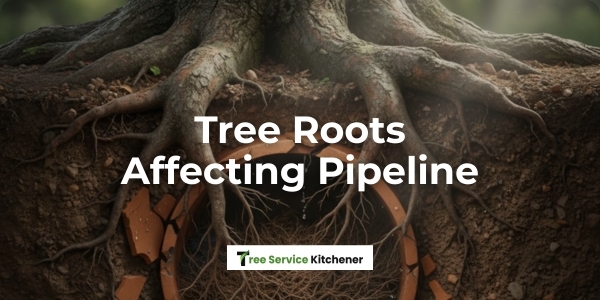
Kitchener homeowners face a relentless enemy beneath their lawns: tree roots that infiltrate sewer pipes, triggering repairs from $5,000 to $15,000 when left unchecked. In our region’s dense clay soils, these roots exploit the slightest leak in aging clay or cast-iron lines, growing up to 1 meter per season toward moisture through a process called chemotaxis. Tree Service Kitchener has tackled thousands of these cases locally, proving that smart prevention keeps your plumbing intact without clear-cutting your yard.
Why Tree Roots Thrive in Kitchener and Target Pipes
Tree roots cause up to 15% of plumbing failures nationwide, per the American Society of Civil Engineers (ASCE) Infrastructure Report Card. Kitchener’s older neighborhoods teem with silver maples, willows, and poplars—shallow-rooted species whose laterals stretch 2-3 times the tree’s canopy width, often reaching pipes buried just 1.2-1.8 meters deep.
These opportunists sense water vapor through soil pores and wedge into micro-cracks at joints, especially after our wet springs that swell groundwater tables. Local stats reveal roots behind 40% of plumbing emergencies here, creating anaerobic sludge that breeds pathogens and risks contaminating your drinking water. The real kicker? Frost heave from variable winters misaligns pipes, widening entry points—precisely why proactive Kitchener strategies outperform waiting for the gurgle in your toilet.
Early Detection and Smart Planting to Head Off Disaster
Spot the invasion before it escalates: sluggish drains, gurgling fixtures, or inexplicably lush grass patches over sewer paths signal roots clogging 4-inch mains standard in Kitchener homes. Sewer camera inspections—biannual at minimum—expose fuzzy blockages early, slashing repair bills by 70% since pros can treat surgically rather than excavate. Pair this vigilance with planting wisdom: ditch thirsty shallow-rooters for deep-taproot oaks or ginkgos, maintaining 10-15 meters from laterals as local bylaws demand. Ontario arborist logs confirm 65% fewer intrusions with proper spacing, and Tree Service Kitchener uses GIS mapping to pinpoint safe zones during consultations.
Barriers, Watering, and Pruning: Your Frontline Defenses
Physical barriers deliver knockout punches—60-90cm HDPE panels (0.6-1.2mm thick) driven vertically block 90% of lateral growth, per field trials, while geotextile versions let fine roots and water pass harmlessly. Retrofit costs $2,000-$4,000 per tree but crushes chemical foam gimmicks long-term, especially on Kitchener’s compact lots where fiberglass sheets shine if installed precisely.
Complement with deep watering (25-50L weekly per mature tree) to anchor roots downward, avoiding the shallow surface hunts that pipe-probe; add slow-release copper sulfate fertilizers (2-4kg/100m² annually) for 50-75% growth suppression, as Ontario studies prove. For existing invaders, air spade excavation reveals laterals for no-more-than-15% pruning to dodge shock dieback, followed by hydro-grinders and hydro-vac monitoring—local data shows 80% fewer repeats when ISA-certified crews.
Pipe Upgrades and Monitoring for Long-Term Pipe Armor
Clay tiles shatter under root pressure; upgrade to PVC Schedule 40 (200psi burst rating) or HDPE fusion-welded mains that roots can’t breach, or go trenchless with CIPP epoxy liners sealing fissures for 50+ years while boosting flow 20-30% at $150-250 per meter locally. Kitchener’s expansive clays accelerate joint failures, making Manning’s roughness tracking essential—from n=0.01 in clean PVC to 0.15 when fouled. CCTV crawlers and acoustic leak detectors catch problems pre-root raid; with regional calls up 15% last year, bundled audits from our team keep you miles ahead. Waterloo Region pinned 35% of 2025 failures on roots, hammering mature suburbs—stump grinding to 30cm depths and 4,000psi hydro-jetting deliver 95% integrated success rates.
Tree roots damaging pipes turns from crisis to control when you layer these tactics. Contact Tree Service Kitchener for your no-obligation site assessment and lock in peace of mind.
FAQs
- Can tree roots damage foundations in Kitchener homes?
Tree roots rarely crack foundations directly but can destabilize soil around them by extracting moisture, leading to uneven settling over 10-20 years. Kitchener’s clay soils amplify this effect during dry spells. Proper soil moisture management prevents most issues. - How do tree roots affect septic systems near Kitchener?
Roots infiltrate septic tanks through cracked lids or outlet baffles, clogging fields and causing failures that cost $10,000+ to repair. Regular tank pumping every 3-5 years keeps them at bay. Avoid planting within 10 meters of any septic components. - When should I call for root inspections?
Contact us if you notice sewer backups during rains or sinking walkways near mature trees—they’ll deploy ground-penetrating radar for non-invasive checks. Early intervention avoids $5,000+ pipe digs. Book at www.treeservicekitchener.com for certified assessments. - Do copper pipes resist tree roots better than plastic?
Copper’s natural antimicrobial properties deter root growth somewhat, but modern PVC remains superior due to seamless joints that eliminate entry points. Roots still probe any micro-leaks. Combine with barriers for full protection. - Can you safely remove problem trees without pipe damage?
We use sectional dismantling and stump grinding to 30cm depths, ensuring no root disturbance reaches pipes. They coordinate with plumbers for seamless ops. Trust their ISA-certified crews at www.treeservicekitchener.com.
People Also Ask
- How long does it take tree roots to grow into pipes?
Aggressive species reach pipes in 5-10 years from planting, accelerating after leaks form. Fine feeder roots probe first, thickening over seasons. Monitor new landscapes annually. - Are there natural repellents for tree roots in sewers?
Rock salt or baking soda flushes offer temporary deterrence by dehydrating roots, but they harm trees and pipes long-term. Professional foaming herbicides work better short-term. Avoid DIY for safety. - What trees are safe to plant over underground utilities?
Dwarf cultivars like columnar hornbeams or serviceberries have compact roots staying under 3 meters wide. Check utility locates first. They thrive in Kitchener without invading lines. - Does pipe insulation stop tree root intrusion?
Insulating wraps don’t block roots but reduce condensation that attracts them. Combine with sealed joints for better results. Focus on root barriers instead. - How much does tree root removal from pipes cost?
Mechanical cutting runs $300-800; chemical treatments add $200. Full pipe replacement hits $4,000+. Prevention saves far more.
Tags: Tree Service Kitchener, tree roots, Kitchener pipes, root barriers, pipe upgrades